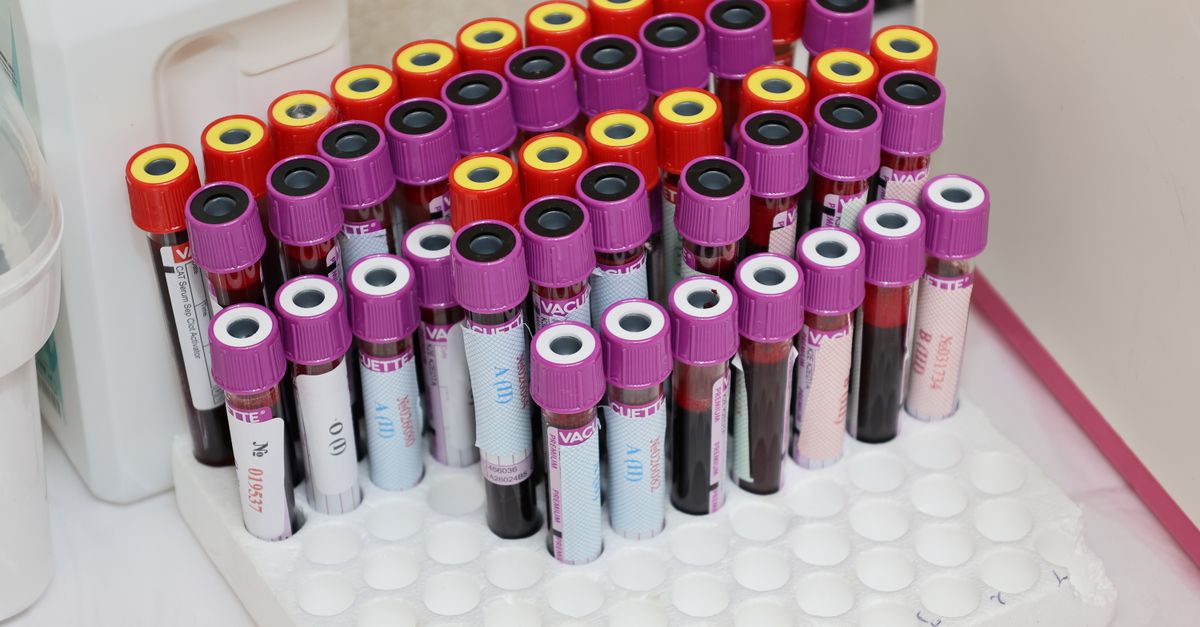
The beta hCG test is a blood test that measures how much hCG is present, as an actual number. It is the first reliable answer available in the whole two week wait, and it is the reason everything before it is guesswork.
It is also the point at which people start comparing numbers with strangers on the internet, which causes an enormous amount of unnecessary distress. So it is worth understanding what the number is and, more importantly, what it is not.
Why the timing is fixed
hCG is produced only after implantation begins, and at first there is very little of it. It roughly doubles every couple of days, so getting to a level that can be measured and interpreted takes time.
Your clinic sets the test date based on when your transfer happened and at what stage the embryo was, because a day five blastocyst is further along than a day three embryo and the arithmetic differs. Testing earlier does not get you an answer sooner. It gets you a number too small to mean anything, which is worse than waiting.
Why one number tells you less than you want
This is the part worth internalising before the results call.
The range of first beta values in pregnancies that continue perfectly normally is very wide. Values that sound alarmingly low have gone on to be fine, and values that sound reassuringly high have not. There is substantial overlap between the outcomes, which is precisely why a single value cannot be read as a verdict.
This is measurable rather than reassurance. Researchers have repeatedly tried to find a first beta value that separates outcomes cleanly after blastocyst transfer, and the cut offs they derive perform poorly in exactly the way the overlap predicts: a study of live births following low serum beta hCG after blastocyst transfer exists at all because those births happen often enough to be worth studying. We have deliberately not printed the cut off numbers from that literature. They are tools for a clinician reading your whole chart, and in the hands of someone holding one result at nine in the evening they do nothing but harm.
What the clinic is actually looking at is the direction of travel. Hence the repeat.
| What it shows | What the clinic does | |
|---|---|---|
| First beta | A starting point, one data point | Schedules a repeat |
| Second beta | Whether it is rising appropriately | Assesses the trend |
| Rising as expected | Encouraging, not conclusive | Arranges a scan in due course |
| Rising slowly | Needs watching | Usually more tests |
| Falling | Not developing as hoped | Discusses next steps with you |
Why comparing numbers online is worse than useless
Three separate reasons, any one of which would be enough.
- Labs differ. Different assays and different units. Two labs can report meaningfully different figures from the same sample, so a number without its lab and its units is not comparable to anything.
- Dates differ. A beta drawn nine days after a day five transfer is not comparable with one drawn twelve days after a day three transfer, and posts online rarely state which.
- The natural range is enormous. Even correcting for both of the above, the spread of normal is so wide that a comparison tells you nothing about your own situation.
If you take one thing from this article, make it this. The number you are given is yours, it is interpreted against your dates and your lab, and holding it up against a stranger’s on a forum is a route to distress with no information at the end of it.
Why the units matter as much as the number
A detail that causes real confusion, and one this page previously got wrong. Results are reported either in milli international units per millilitre or in international units per litre, and those two are numerically identical: 1 mIU/mL is 1 IU/L, so the same sample gives the same figure under either label. If you have been told your units differ from someone else’s and that explains the gap, it does not.
What genuinely does differ is the assay. Laboratories use different antibodies and different reference standards, and they detect the several forms hCG circulates in to different degrees, so two labs really can return different figures from one sample. A 2024 reappraisal of hCG dynamics in early pregnancy goes through why. The practical consequence is the same either way: your result is interpreted against your laboratory and your dates, so ask what the laboratory considers a typical range at your stage rather than assuming a number travels.
That single question makes the number meaningful in a way that no amount of searching can, because it anchors it to the scale it was measured on.
What to ask when they call
The results call is short and easy to freeze in. Having questions written down beforehand helps more than you would expect.
- What is the number, and what units
- When do you want to repeat it
- What are you hoping to see on the second test
- Do I carry on with all my medication exactly as before
- Who do I call if anything changes in the meantime
That last one matters. Whatever the first number is, you are still in a waiting period, and knowing who to call removes one thing to worry about.
What happens after a good result
The beta test is not the end of the process, which surprises people who have been treating it as a finish line for a fortnight.
If the numbers rise as expected, the clinic will usually arrange a scan a couple of weeks later. That scan is looking for things a blood test cannot show: how many, and in the right place. Until then you continue medication exactly as instructed, which people frequently assume they can stop once a positive arrives.
That gap between a positive beta and a first scan is its own kind of waiting, and almost nobody warns you about it. It is often harder than the first fortnight, because now there is something to lose.
Slow rising numbers
This deserves its own mention, because it is the outcome that produces the most searching and the most fear.
A number that rises but more slowly than the clinic hoped is genuinely uncertain rather than a verdict. Some go on normally. Some do not. Clinics respond by testing again rather than by concluding, and that is not evasion, it is that the information does not exist yet.
There is a piece of history here that is quietly comforting. Clinicians do use published minimum rise figures, and those figures have moved in one direction as more pregnancies were measured. A widely cited 2004 analysis put the slowest rise compatible with a normal pregnancy at 53 per cent over 48 hours. Later guidance from the American College of Obstetricians and Gynecologists lowered it again, to 49 per cent where the starting value is under 1,500, and lower still at higher starting values. And a case series of viable pregnancies after embryo transfer documents rises slower than any of those thresholds that continued perfectly well.
Every revision has widened the definition of normal rather than narrowing it. That is the shape of a field discovering its early rules were too strict, and it is a reason to let your clinic read your trend rather than reading it yourself against a number from a forum.
If you are in this position, the most useful thing you can do is ask your clinic directly what they are watching for and when they expect to know. A specific answer from the people holding your notes beats anything you will find searching, and searching in this particular situation is unusually punishing.
If the news is not good
Some of these calls are difficult, and you deserve better than a website pretending otherwise.
If the number is low or falling, the clinic will explain what they think is happening and arrange either more tests or a follow up conversation. You do not have to make any decisions during that call, and you are allowed to ask them to repeat things or to call back when someone is with you.
A very early loss is still a loss. It does not need to have progressed further to have counted, and grief for it does not require anyone’s permission.
If the repeat draw is the part you are waiting on, why your clinic draws the quantitative test twice goes through what the second number is for and how the two are read together. For what happens on the way to this test, what symptoms can and cannot tell you covers the fortnight before it, and testing at home covers whether to test at home first.
Frequently asked questions
What does the beta test measure?
It measures the amount of hCG in your blood directly, as a number, rather than showing a line above or below a threshold the way a home test does. That precision is why the clinic uses it and why it can be repeated to show a trend.
Why does the clinic test on a specific day?
Because hCG has to reach a measurable level first, and how long that takes depends on when the embryo was transferred and at what stage. Testing earlier produces numbers too low to interpret, which creates distress without producing information.
Is a higher number better?
Not in the way people hope. There is a very wide range of first values in pregnancies that go on perfectly well, and there is substantial overlap between outcomes. What the clinic watches is how the number changes between tests, not where it started.
Why do they repeat the test?
Because the trend carries the information. A single value is one point with no direction. Two values a couple of days apart show whether it is rising as expected, and that is what the clinic is actually assessing.
Can I compare my number with someone else’s?
It will not tell you anything useful and it is likely to upset you. Different labs use different assays and units, transfer days differ, and the natural range is enormous. Two people with identical outcomes can have wildly different numbers.
What if my number is low?
It means the clinic will want to repeat the test, and it does not by itself settle anything. Low first values sometimes rise normally. Ask your clinic what they are watching for rather than searching, because the answer depends on your protocol and your dates.
Are mIU/mL and IU/L different numbers?
No. One milli international unit per millilitre equals one international unit per litre, so the same sample reports the same figure under either label. Differences between laboratories come from the assay used, not from the unit printed beside the number.
Why is the repeat test 48 hours later rather than the next day?
Because hCG rises slowly enough that a single day of change sits inside the noise of the measurement. Two days gives a difference large enough to read against published rates of rise. It is also why testing yourself in between adds nothing your clinic will act on.
This article is general information, not medical advice, and is not a substitute for care from a qualified healthcare professional. Speak to your doctor about your own situation.
Leave a Reply