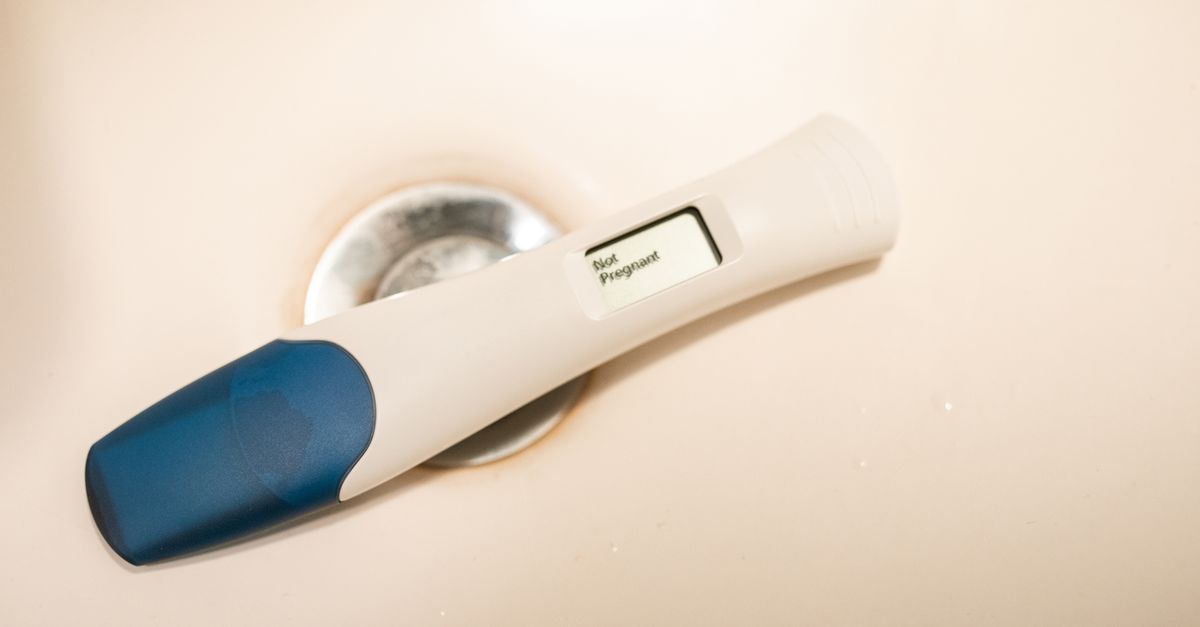
Home testing after IVF is different from home testing after trying naturally, and the difference is the trigger shot.
A trigger shot contains hCG. Home pregnancy tests detect hCG. So for some days after the injection, a positive home test may be showing you the medication you were given rather than a pregnancy. That single fact is responsible for a great deal of hope and grief that turns out to have been about nothing at all.
How many days is worth knowing, and it is longer than most people assume. Injected hCG has an elimination half life of roughly 30 hours, so it falls away steadily rather than switching off. In a study measuring hCG through the early luteal phase after a bolus trigger, less than a tenth of the injected amount remained by day 10, and it was still detectable in some women up to 14 days after the injection. Clearance varies with the dose, how it was given, and your own metabolism, which is why nobody can give you a date that is right for everybody.
Notice what that means for the calendar. The window in which a trigger can still show up overlaps almost exactly with the days people are most tempted to test.
Why early results are unreliable in both directions
| Result before your test date | What it might mean |
|---|---|
| Positive | A pregnancy, or leftover trigger shot, and you cannot tell which |
| Negative | Not pregnant, or hCG has not risen enough yet |
| Faint line | Any of the above, plus dilution and test sensitivity |
| Line that fades over days | Trigger clearing, or an early loss, and you cannot tell which |
Every row is ambiguous. That is the honest state of early testing after a trigger, and it is why clinics set a date rather than telling you to test whenever.
If you had a frozen transfer
The picture is usually simpler, because many frozen cycles are medicated and involve no trigger shot at all, so a positive is less likely to be medication. The exception is the hCG injection used to time ovulation in a modified natural FET cycle, which can show on a home test exactly as a fresh cycle trigger does.
Early testing is still unreliable though, because hCG may not have risen enough to detect, so a negative can be wrong. The trigger problem goes away and the too early problem does not. If you have already tested and seen nothing, what a negative test at seven days past transfer actually rules out works through the hCG arithmetic for that day.
If you are not sure which type of cycle you had, or what the difference is, the different treatment types covers the main treatment types in plain terms, and what happens on each day of a frozen transfer cycle sets out where your test date sits in the schedule and why it falls when it does.
The chemical pregnancy question
This is the part that is rarely discussed honestly, and it deserves to be.
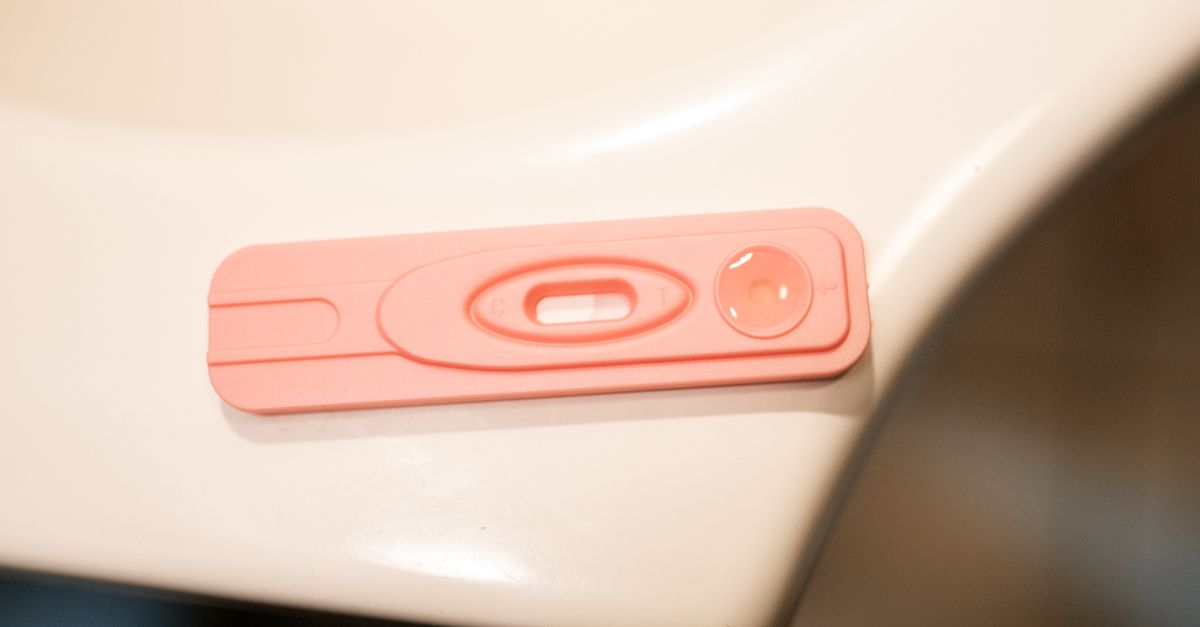
Some pregnancies end very shortly after implantation, and the clinical name for it is a chemical pregnancy, meaning one confirmed by an hCG test but ended before a scan could show anything. Before sensitive home tests existed, most of these were never detected at all: a period arrived, perhaps slightly late, and nothing more was known.
Testing early detects some of them. That means early testing can convert something you would never have known about into a positive result followed by a loss, with everything that carries emotionally.
That is not an argument against testing. Some people would much rather know, and that is a completely legitimate position. It is an argument for making the decision deliberately, understanding what you might be signing up for, rather than drifting into it at seven in the morning on day nine.
There is no correct answer here, and anyone who tells you otherwise is talking about themselves. What reliably helps is deciding in advance, telling someone what you decided, and not renegotiating it daily.
If you are going to test
- Decide the day in advance and hold to it, rather than deciding each morning.
- Know roughly when your trigger was and that it may still be present, so a positive is not conclusive.
- Use the same brand each time if you are testing more than once. Sensitivity genuinely varies: urine assays typically start detecting somewhere between 20 and 50 mIU/mL, and many over the counter tests do not detect hyperglycosylated hCG, which is most of the hCG present in very early pregnancy. Two brands are two different instruments, so a line that looks lighter than yesterday may only mean you changed boxes.
- Do not photograph and compare lines across days. It measures nothing and it will occupy your whole evening.
- Do not change any medication based on a home test, whatever it shows.
- Tell your clinic what you have seen, and let their test be the answer.
If you are not going to test
Also a completely reasonable choice, and it needs its own plan rather than just willpower.
- Do not keep tests in the house, because the decision is much harder at six in the morning with a box in the cupboard
- Tell whoever you live with what you decided, so you are not negotiating it alone
- Expect days nine to eleven to be the hardest and put something in the diary for them
- Remind yourself that the clinic test is not further away because you did not test, and it is not closer if you do
The cost nobody puts in the decision
Discussions about early testing focus on accuracy. The thing that actually decides whether it was a good idea is usually emotional rather than technical.
Testing early rarely produces one moment. It produces a routine: testing each morning, comparing against yesterday, photographing lines, examining them in different lights, and starting again the next day. People describe losing whole days to it. That is a real cost and it is worth weighing alongside the accuracy question.
Against that, some people genuinely cannot bear not knowing, and find any information easier than none. Both are legitimate. What is not useful is drifting into daily testing without having chosen it.
If you have a partner in this
Testing decisions are often made by one person and experienced by two, which causes more friction than the subject deserves.
- Agree in advance whether you are testing, and if so when. Discovering it after the fact hurts.
- Agree who finds out first and how. Some people want company, some want a minute alone.
- If one of you wants to test and the other does not, the person going through the medical process reasonably gets the deciding vote, and the other is allowed to say it is hard.
- Decide what happens if a result is ambiguous, because faint lines produce far more argument than clear ones.
What the clinic test does that this cannot
It measures the amount rather than showing a line, it is interpreted against your dates and your protocol, and it can be repeated to show a trend. That is three things a home test cannot do. the beta test covers what the number actually means, and what a beta hCG negative result means and what happens next covers the outcome nobody wants to plan for.
When to phone the clinic rather than search
Heavy bleeding that soaks a pad, severe or worsening pain, a fever, shortness of breath, sudden severe bloating, or vomiting you cannot keep on top of. Those are reasons to phone the clinic now rather than to search. Clinics expect these calls and would far rather hear from you early.
Frequently asked questions
Can a trigger shot cause a positive home test?
Yes. A trigger shot contains hCG, which is exactly what a home test detects. It takes time to clear, and until it does a positive result may be showing you the injection rather than a pregnancy. This is the single biggest reason early testing misleads people after IVF.
How long does the trigger shot take to clear?
It varies with the dose and with your own metabolism, generally several days to well over a week. Because it varies, no fixed number can be relied on, which is another reason the clinic date is set where it is.
What is a chemical pregnancy?
An early loss shortly after implantation, sometimes before it would have been noticed at all without testing. Early home testing detects some of these, so it can turn something you might never have known about into a distinct loss you experience.
Can I get a negative and still be pregnant?
Yes, easily, if you test before hCG has risen enough to detect. Early negatives are common and frequently wrong, which is why a negative before your test date should not be treated as an answer.
Should I test early or not?
That is genuinely a personal call and there is no right answer. What helps is deciding in advance rather than each morning, and being honest with yourself about which outcome you would handle better: an unreliable answer now, or waiting.
Does a darker line mean a better result?
No. Line intensity varies with test brand, how dilute your urine was, and the time of day. Comparing lines across days is a well known route to distress and it is not a measurement of anything.
Why does a different brand of test give a different result?
Because they are not equally sensitive. Urine assays typically begin detecting hCG somewhere between 20 and 50 mIU/mL, and many over the counter tests do not pick up hyperglycosylated hCG, which makes up most of the hCG present in the earliest days. Switching brands mid week changes the instrument, so a lighter line may reflect the box rather than anything about you.
Does a frozen transfer involve a trigger shot?
Usually not in the same way, which removes the false positive problem. It does not remove the too early problem: hCG may simply not have risen far enough to detect yet, so a negative before your clinic date still tells you very little. Protocols differ, so check what yours involved rather than assuming.
This article is general information, not medical advice, and is not a substitute for care from a qualified healthcare professional. Speak to your doctor about your own situation.
Leave a Reply