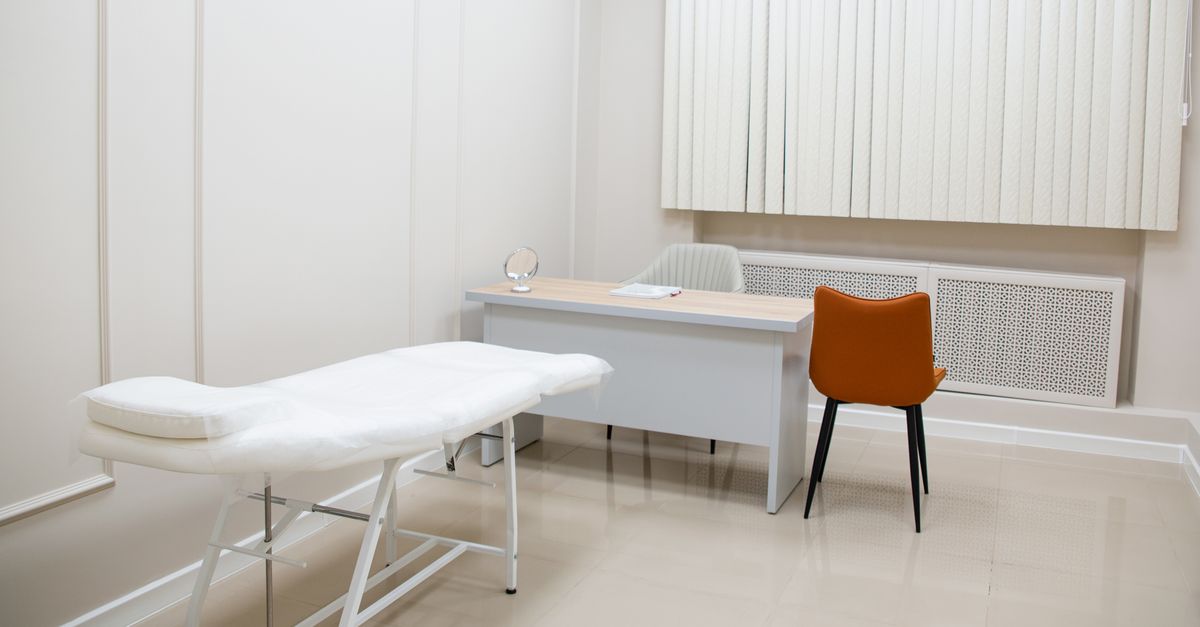
The egg transfer process is short, commonly quoted at around ten minutes, and normally needs no anaesthetic. You arrive with a full bladder, a speculum is placed, a soft catheter passes through the cervix while a scan watches from the outside, the embryo is released, and then you get dressed and go home.
Listen to this article, about 10 minutes. A synthetic voice reads the article and announces each section title as it begins; tables are read row by row and the questions at the end are left out.
Recorded 3 October 2026 from the article as published that day. Press a chapter to jump there; the highlighted line is what is playing. A play button sits beside every section heading, and once you scroll past this player a bar at the bottom of the screen keeps the controls in reach. Tap or click any sentence to hear the reading start from there.
Why does everyone in the clinic say embryo transfer?
You searched for the egg transfer process. The clinic will say embryo transfer all day, and you may briefly wonder whether you booked the wrong appointment. You did not. The word changed because the biology did, several days ago: the egg was fertilised in the laboratory, and by transfer day it has divided into an embryo, usually a day three embryo or a day five blastocyst. Nobody in that room has thought less of a patient for saying egg.
The distinction worth keeping is that this is not egg collection. Collection is the day eggs come out, under sedation, through the vaginal wall. Transfer is the day one embryo goes back in, awake, through the cervix. Our guide to the types of assisted reproductive technology lays the rest of the vocabulary out plainly. The same wording trips up clinic pricing pages, where warming an embryo and warming frozen eggs get quoted as though they were one procedure.
What actually happens in the room, step by step?
Clinics differ in the details, and yours will have its own choreography, but the shape of the appointment is remarkably consistent:
- You arrive with a bladder you were asked to fill. How much water, and how long beforehand, is set by your clinic, and the instructions vary more than you would expect.
- Identity checks, twice over. You confirm your name and date of birth, and in the laboratory an embryologist and a witness check the labels on the dish. It feels like bureaucracy. It is the part of the day most worth the time it takes.
- You undress from the waist down and lie on a couch with your legs supported, in the same position as a smear test.
- A speculum is placed and the cervix is wiped clean. Mucus at the opening is usually removed, because it can plug the tip of the catheter.
- An ultrasound probe presses on your abdomen. Not internal. The full bladder lets the sound travel, and your uterus appears on a screen you can usually see.
- The embryologist loads the embryo into a thin, soft catheter next door and walks it in, which is why the two halves of the building are always adjacent.
- The catheter is threaded through the cervix while the doctor watches the tip on screen. This is the part people brace for. Most report pressure rather than pain.
- A small flash appears on the scan as the drop of fluid carrying the embryo leaves the catheter. It is a bubble of fluid, not a baby.
- The catheter comes straight out and goes back to the laboratory to be checked under a microscope, confirming the embryo actually left it.
- Speculum out, and you can go to the toilet. By common consent, the best moment of the appointment.
Why do they make you drink so much water?

Two reasons get given. The first is straightforwardly true: an abdominal scan needs fluid to see through, and a full bladder is the window that makes your uterus visible. The second is that it tips a forward leaning uterus into a straighter line with the vagina, making the catheter easier to pass.
That second reason is repeated with far more confidence than the evidence supports. A Cochrane review of preparation techniques before embryo transfer, published on 6 August 2026, pooled the trials and reported the authors were very uncertain about a full bladder compared with an empty one, whether for pregnancy, for miscarriage or for how difficult the transfer turned out to be. Across the two relevant studies, covering 273 women, no live birth data were reported at all.
This is not a licence to turn up empty. Your clinic’s sonographer has to see your uterus on the day, and their instruction stands. It is a licence to stop believing the discomfort is quietly doing something for your chances. It is doing something for the picture, which is a smaller and much more honest job.
How much of the egg transfer process is supported by evidence?
Almost no clinic page sets the steps against what the guidelines say about each one, which leaves the appointment feeling like one indivisible ritual. It is not. Some steps are backed by good evidence, one is recommended against, and one is close to a coin toss.
| Step | What it is for | What the evidence says | Source |
|---|---|---|---|
| Full bladder | A window for the abdominal scan, and possibly a straighter angle into the uterus | Very uncertain for pregnancy, miscarriage or ease of transfer. No live birth data across two studies in 273 women | Cochrane review, 6 August 2026 |
| Wiping the cervix and removing mucus | Stops mucus plugging the catheter tip or dragging the embryo back out | Fair evidence of benefit, graded B | ASRM guideline, 2017 |
| A soft catheter rather than a firm one | Less trauma to the cervix and the lining | Good evidence of higher pregnancy rates, graded A | ASRM guideline, 2017 |
| Abdominal ultrasound guidance | Puts the catheter tip where the doctor intends rather than where it feels right | 21 trials in 6,218 women. Odds of live birth 1.47, 95% confidence interval 1.30 to 1.65, on low certainty evidence | Cochrane review, 2016 |
| Withdrawing the catheter immediately | Nothing is gained by holding it in place | Fair evidence for immediate withdrawal, graded B | ASRM guideline, 2017 |
| Sedation or anaesthetic | Comfort | Not recommended routinely. No demonstrated benefit to outcomes, and anaesthesia carries its own risks | ASRM guideline, 2017 |
| Bed rest afterwards | Historically, reassurance | Good evidence against it. More than 20 minutes of lying still does not improve the outcome | NICE and ASRM |
| Transferring a single embryo | Avoiding the risks of a twin pregnancy | Strong recommendation for elective single embryo transfer, both under and over 38 | ESHRE guideline, 2023 |
Read down that middle column and a pattern shows up. The steps with the strongest evidence behind them are the ones nobody asks about, the catheter and the scan. The step everyone fixates on, and the one that generates the most advice from strangers, is propped up by two small old studies. The same gap between confidence and evidence runs through the lab extras some clinics add before a transfer, as our look at how the major guidelines rate assisted zona hatching shows.
Does the egg transfer process hurt?
Most people are not given an anaesthetic. The Human Fertilisation and Embryology Authority puts it plainly: you will not need any kind of anaesthetic unless you have a condition that would make the procedure painful. Where pain has been measured on a ten point scale, average scores come out at roughly three. In one placebo controlled trial published in Fertility and Sterility, mean scores during the procedure were 2.95 and 3.03 in the two groups.
An average of three hides a wide spread, and it hides the transfers that are difficult. When a catheter will not pass, the appointment takes longer, the team may need a firmer catheter or an instrument to steady the cervix, and it hurts more. The mechanics behind that, and which part of the appointment people actually name as the painful one, are set out in our guide to what causes pain after an egg transfer.
Most of what is felt on an ordinary day is the speculum and the bladder, which is to say the plumbing rather than the embryo. In a fresh cycle the transfer follows egg collection by only a few days, so your ovaries are still enlarged. Severe or worsening pain, rapid bloating, breathlessness, or passing much less urine than usual needs a call to your clinic the same day. So does heavy bleeding or a fever. Your clinic knows your protocol, your scan results and your history. This website knows none of those things.
What happens after you get off the couch?

Some clinics have you lie there for ten or twenty minutes. Some hand you your clothes. Both are defensible, because neither changes anything. NICE tells clinics to inform women that bed rest of more than 20 minutes after transfer does not improve the outcome, and the ASRM guideline grades the evidence against bed rest at its highest level. You will want the toilet, and using it does not dislodge anything. Nor does standing up, walking to the car, or sneezing on the way home.
Then the appointment ends and the hard part starts, the fortnight in which nothing you can feel will tell you anything. Our frozen embryo transfer timeline covers what is happening biologically on each of those days, and why the calendar is more informative than your body. If you expect to spend it cataloguing twinges, where cramps are felt and why the map is wrong is worth reading first.
One thing worth carrying out of the room: a quiet two weeks is not a bad sign. Transfers that work with no symptoms at all are common, and they are invisible on forums because nobody posts to announce that nothing is happening. The same logic applies to the signs of implantation lists that find you at three in the morning. They describe progesterone, and progesterone is in the room whatever the embryo is doing.
How many embryos will they transfer?
Usually one, decided with your clinic before the day rather than on it. The ESHRE guideline on the number of embryos to transfer, published in 2023, makes a strong recommendation for elective single embryo transfer both under and over 38. The Human Fertilisation and Embryology Authority reported in June 2026 that single embryo transfers reached 84 per cent of UK transfers, while the multiple birth rate has fallen to around 5 per cent from roughly 28 per cent in the early 1990s. A clinic proposing one embryo is following the evidence, not rationing your chances.
Frequently asked questions
Can my partner come into the room for the transfer?
Many clinics allow one person in and some do not, so ask when you book rather than finding out at the door. Where they are allowed in, they usually stand by your head.
Do I need to fast before an egg transfer?
Usually not, because there is normally no sedation involved. Your clinic will tell you directly if sedation is planned, and fasting instructions come with it. Follow your own clinic rather than a forum.
What if I cannot hold my full bladder until the transfer?
Tell the nurse. Being asked to empty a little and then top up is an ordinary request that clinic staff hear every week, and it beats being unable to lie still.
Can the embryo fall out when I stand up or use the toilet?
No. The embryo sits inside the uterine cavity, which is not an open tube, and gravity does not apply the way it feels like it should. Standing, walking and urinating do not move it, which is also why bed rest changes nothing.
Why does the embryologist take the catheter back to the laboratory?
To check under a microscope that the embryo actually left it. A retained embryo is uncommon, and when one is found the transfer is repeated straight away, usually before you have got up off the couch.
Is a frozen transfer different from a fresh one in the room?
The procedure is essentially the same: same position, same speculum, same catheter, same scan. What differs is everything leading up to it, including how your lining was prepared. Our frozen embryo transfer timeline covers that side.
This article is general information, not medical advice, and is not a substitute for care from a qualified healthcare professional. Speak to your doctor about your own situation.
Leave a Reply